Our story
Why we built Elendil Labs.
Jing Xie
Co-Founder
Satya's recent article hit me hard. It's basically the story of my 2026.
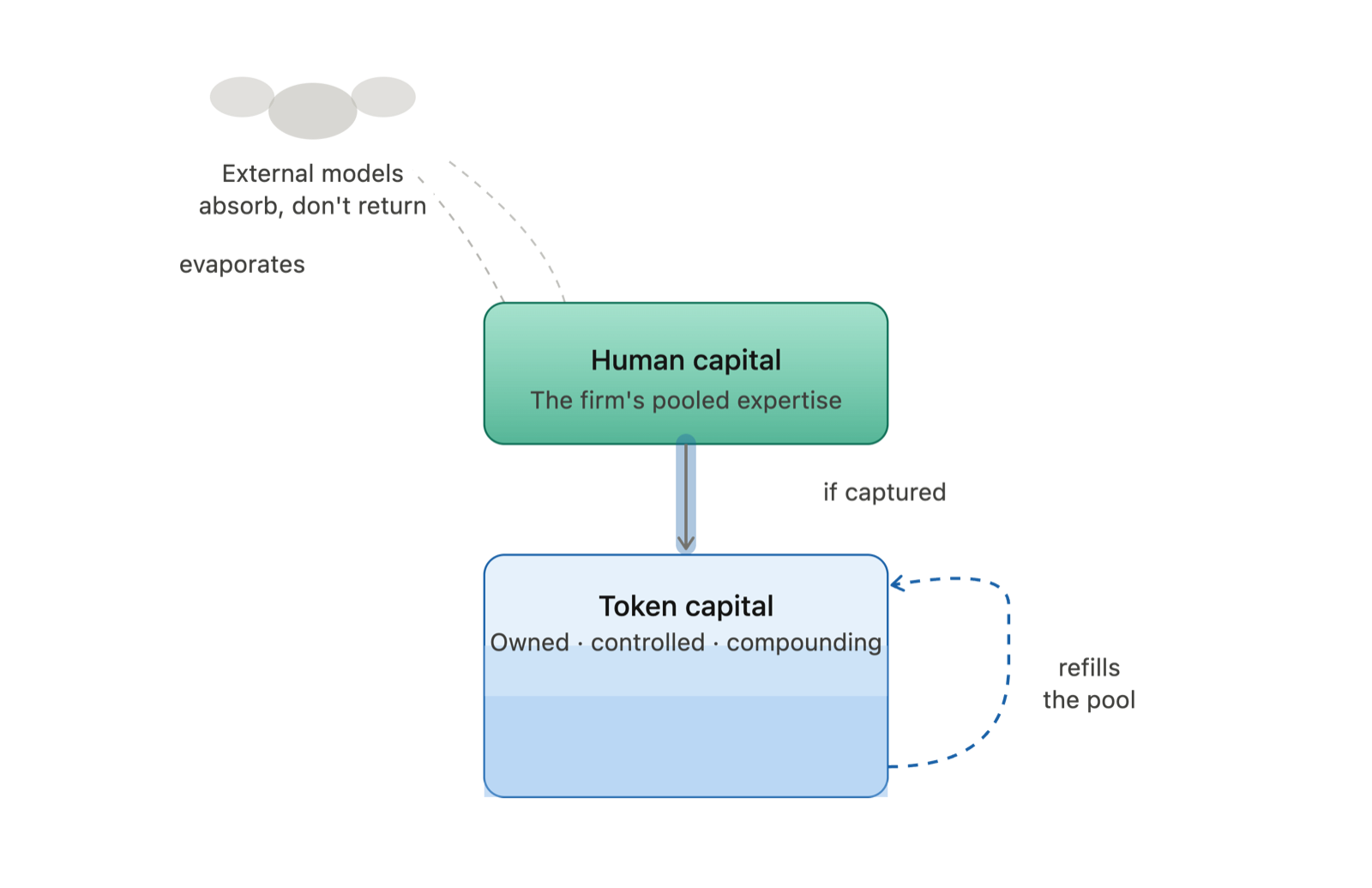
His point, as I read it, is simple. The real AI opportunity isn't just using models. It's translating human capital into token capital, and then owning the learning loop.
I started 2026 as a man on a mission to build an AI-native hedge fund. Not “use ChatGPT to summarize filings” AI-native. I mean research, trading, risk, operations, data engineering, knowledge management, and decision support. All of it rebuilt around agents, workflows, and models.
Along the way, people asked if I wanted to manage money for them. Others suggested I should double down on AI education and become an “AI advisor” to firms still figuring out their strategy. Both were reasonable paths. But I kept coming back to the same thing: I didn't want to just talk about AI.
I wanted to build the machine.
So I kept building. Brick by brick. Agents. Skills. Research workflows. Data pipelines. Trading systems. Coding agents. Knowledge bases. MCP servers. Investment processes that could actually talk to each other.
And slowly, something became obvious. The hard part wasn't building another agent. The hard part was preserving what the agents, workflows, and humans were learning every day. Because without that, the expertise evaporates.
This is where the reservoir metaphor matters. Every firm already has human capital. It lives inside the heads of analysts, PMs, traders, operators, and partners. It shows up in memos, meetings, diligence calls, investment debates, risk reviews, and the little judgment calls that never make it into the official file.
But if you don't capture it, govern it, and turn it into something reusable, it disappears. Or worse, it runs off into the shared sea of models, where everyone else, including your competitors, can eventually benefit from the same general capability.
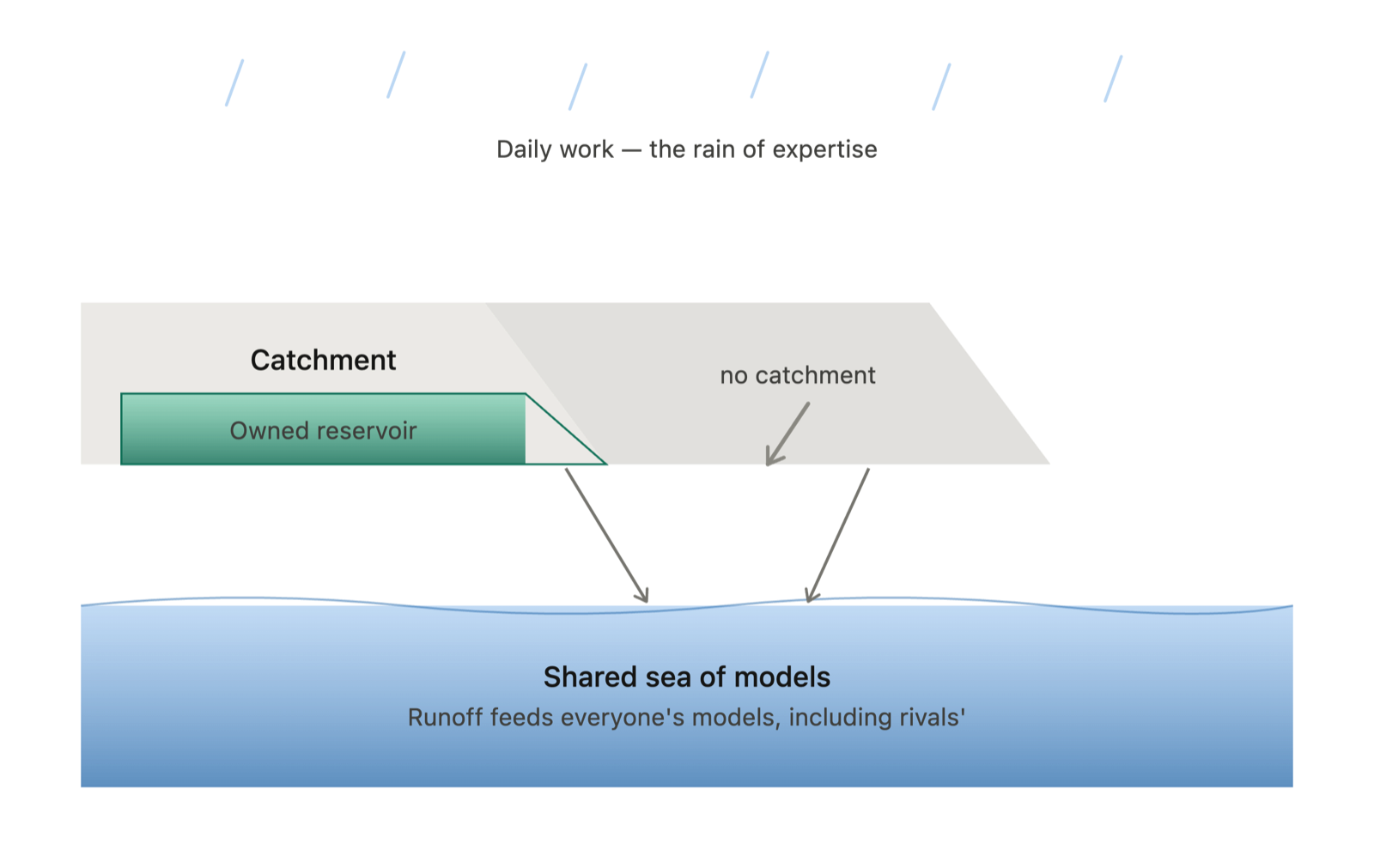
That's the difference between using AI and building token capital. One consumes. The other compounds.
In Q1, the AI investment system I'd built was already accelerating research and contributing to real alpha generation. Nice problem to have, hehe.
But there was still a bottleneck. Me. I still had to make the final judgment call on what to buy, when to sell, when to take a loss, and when to override the system. That doesn't scale. And more importantly, it meant the system wasn't fully learning from the judgment layer. The machine could help me move faster, but it wasn't yet preserving enough of why I made the decisions I made.
That was the missing piece. Institutional memory. A governed learning loop. A way to organize the agents, skills, research, workflows, strategies, and decisions so the whole firm could become more intelligent every day.
Then I met Oliver. He was working on the exact same problem from the other side: institutional memory, capital markets workflows, and continuous learning loops. So we teamed up and started Elendil Labs.
Because I think this is the thing most firms are missing right now. Not another chatbot. Not another generic agent. Not another dashboard that looks impressive in a demo and quietly dies three weeks later.
The real question is this: how does your firm turn the work it's already doing into intelligence it owns?
If you're a capital markets firm, your edge isn't just your data. It's your judgment. Your research process. Your house view. Your investment committee debates. Your trading decisions. Your mistakes. Your scars. Your pattern recognition. Your people.
The firms that win with AI will be the ones that capture all of that and turn it into token capital. Owned. Controlled. Governed. Compounding.
That's why Elendil Labs exists.
If you're thinking seriously about how to become an AI-native firm, Oliver and I would love to talk.